
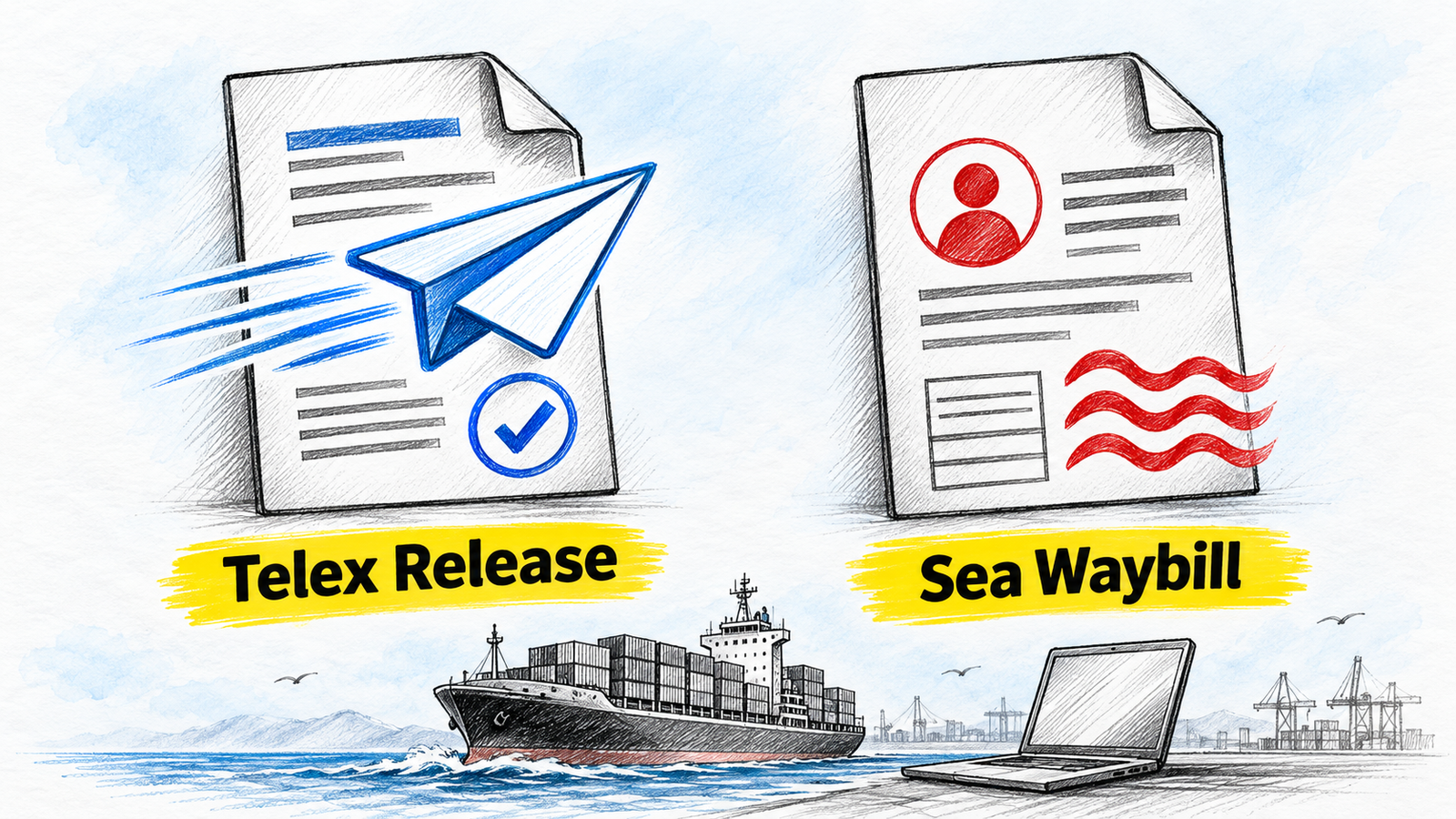
Telex Release vs. Sea Waybill: Key Differences Explained
Cargo release arrangements determine how the consignee receives goods at the destination. Telex release and sea waybill procedures can simplify documentation, but they serve different purposes.
What Is a Telex Release?
A telex release generally allows the carrier to release cargo without the consignee presenting original bills of lading at the destination, after the carrier’s surrender requirements have been satisfied.
The shipper must confirm the procedure with the issuing carrier, including document surrender and any applicable charges.
What Is a Sea Waybill?
A sea waybill is a non-negotiable transport document identifying the consignee. Cargo release normally depends on verifying that consignee’s identity and completing the carrier’s release requirements, rather than presenting an original negotiable bill of lading.
Which Option Should You Choose?
The appropriate option depends on the payment arrangement, transaction requirements, and carrier procedures. Bank-financed transactions may require specific documents.
Agreeing on the release method before shipment helps avoid delays caused by missing originals or incomplete release instructions.